High-grade steel pipe weld overall performance
Optimizing Weld Seam Performance in High-Strength Pipeline Steels: Enhancing Fracture Toughness via Weld Material Formulation and Heat Input Control
Introduction to High-Strength Pipeline Steels and Welding Challenges
High-potential pipeline steels, categorised below API 5L requirements including X80 (minimum yield strength of 80 ksi or 555 MPa) and increased grades like X100 (690 MPa), are indispensable for modern-day vitality infrastructure, allowing the shipping of oil and gasoline over lengthy distances with decreased cloth usage and greater potency. These steels are often high-force low-alloy (HSLA) compositions, microalloyed with components like niobium (Nb), titanium (Ti), and boron (B) to obtain ultimate force-to-weight ratios and resistance to deformation underneath excessive-stress stipulations. However, welding these constituents affords fabulous challenges by reason of their susceptibility to microstructural adjustments throughout the welding activity, which can compromise the integrity of the weld seam and warmth-affected zone (HAZ).
The prevalent issue in welding X80 and above steels is guaranteeing that the fracture toughness of the weld metallic (WM) and HAZ suits or exceeds that of the bottom metal (BM). Fracture sturdiness, quantified with the aid of metrics corresponding to Charpy V-notch (CVN) have an impact on calories and crack tip opening displacement (CTOD), is major for combating brittle failure, exceedingly in low-temperature environments or below dynamic loading like seismic movements or floor shifts. For instance, API 5L requires minimal CVN energies of fifty-one hundred J at -20°C for X80 welds, based on venture specifications, whilst CTOD values have to exceed 0.10 mm at the minimum layout temperature to circumvent pop-in cracks or cleavage fracture.
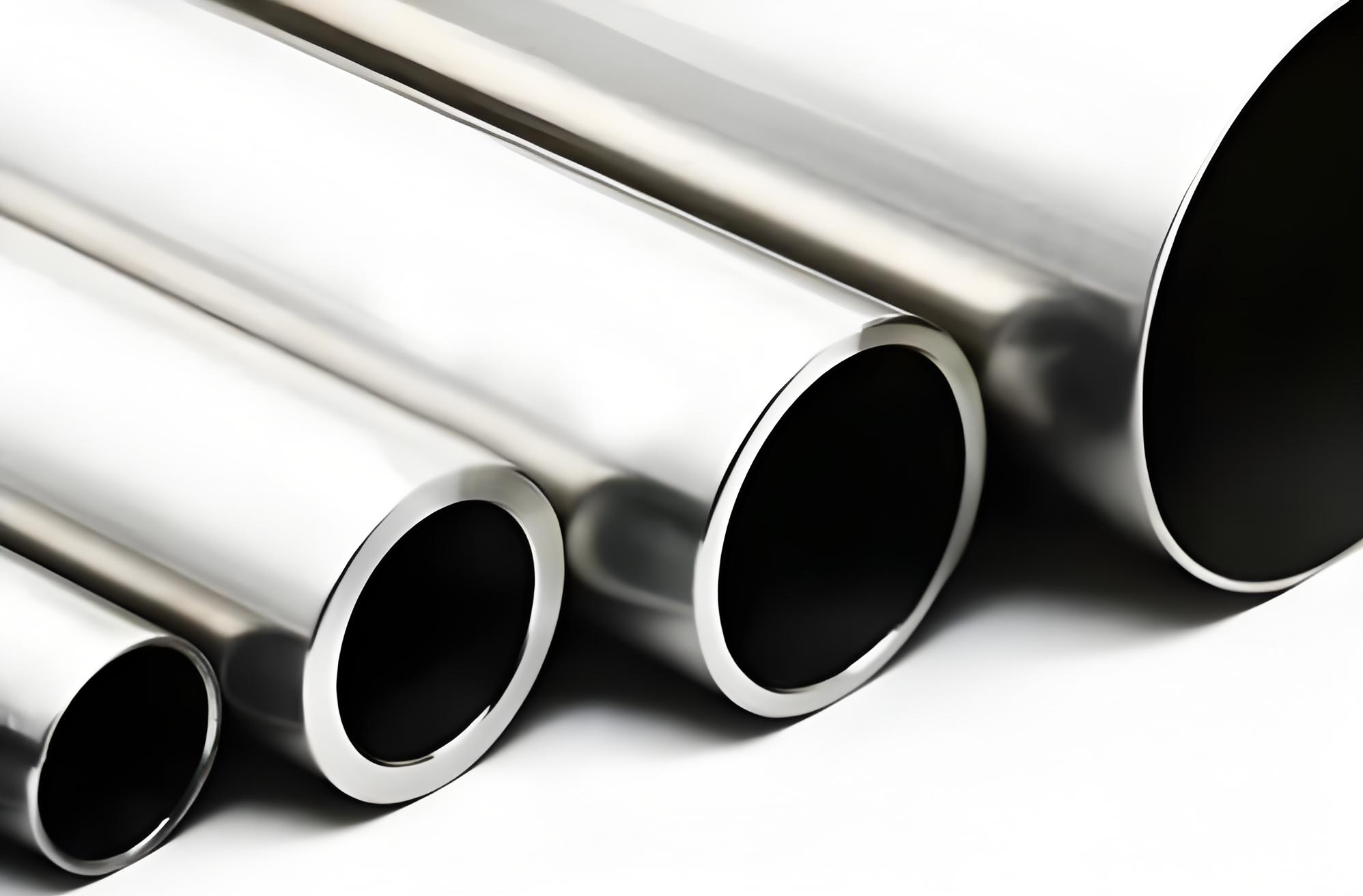
Optimizing Weld Material Formulation: Emphasis on Low Oxygen Content
Weld drapery method performs a valuable function in deciding the mechanical homes of the WM, tremendously its resistance to brittle fracture. For X80 and X100 pipeline steels, consumables have to be specific or designed to overmatch the BM's yield force (pretty much five-15% top) even though maintaining high sturdiness. Common approaches consist of gasoline metallic arc welding (GMAW), submerged arc welding (SAW), and flux-cored arc welding (FCAW), where the filler steel chemistry rapidly affects oxygen incorporation.
Oxygen content material in the weld metal, in general from defensive fuel dissociation or flux decomposition, is a crucial parameter. At degrees above two hundred-three hundred ppm, oxygen varieties oxide inclusions (e.g., MnO, SiO2) that act as fracture nucleation sites, slicing CVN energies and CTOD values through facilitating dimple refinement or cleavage initiation. In excessive-energy welds with martensitic microstructures, oxygen phases as little as 140 ppm can shift the fracture mode from ductile to brittle, with upper shelf CVN energies losing pipeun.com notably. Conversely, ultra-low oxygen (less than 50 ppm) promotes a purifier microstructure dominated by using acicular ferrite or great bainite, improving durability devoid of compromising capability.
To achieve low oxygen, sturdy wires are hottest over metal-cored or flux-cored variants, as the latter can introduce 50-a hundred ppm extra oxygen because of surface oxides or flux reactions. For illustration, in GMAW of X80, solid wires like ER100S-1 reach oxygen levels of 20-25 ppm lower than argon-prosperous defensive (e.g., eighty two% Ar-18% CO2), yielding CVN values of 107 J at -60°C, compared to forty one-61 J for steel-cored wires at fifty three ppm oxygen. Optimization concepts incorporate because of deoxidizers like magnesium (Mg) or aluminum (Al) in the cord, which will cut oxygen to 7-20 ppm in flux-cored wires, holding fracture look transition temperatures (FATT) beneath -50°C even at increased strengths (360-430 HV).
Alloying materials further refine the formulation. Manganese (Mn) at 1.4-1.6 wt% within the WM retards grain boundary ferrite formation and promotes acicular ferrite nucleation, boosting CVN durability with the aid of 20-30%. Nickel (Ni) additions (0.nine-1.3 wt%) atone for oxygen-triggered sturdiness loss in steel-cored wires, stabilizing low-temperature bainite and achieving CTOD values of 0.14-0.42 mm at -10°C for X100 welds. Molybdenum (Mo) at 0.3-zero.5 wt% enhances hardenability, at the same time titanium (Ti) and boron (B) (optimized at zero.01-0.02 wt% Ti elegant on nitrogen ranges) pin grain boundaries, decreasing past austenite grain dimension (PAGS) and M-A formation. Cerium (Ce) additions (50-100 ppm) provide a singular way by means of changing Al2O3 inclusions to finer CeAlO3 dispersions, refining grain sizes and expanding CVN from 73 J to 123 J at the same time as raising yield electricity from 584 MPa to 629 MPa.
In prepare, neural network units are employed to predict prime chemistries, balancing oxygen, nitrogen, and alloying for X100 consumables like 1.0Ni-zero.3Mo wires, guaranteeing overmatching yield strengths of 838-909 MPa with CVN >249 J at -20°C. For container welding, self-shielded FCAW electrodes (e.g., E91T8-G) with Ni and low hydrogen (<4 ml/100g) minimize oxygen pickup, achieving HAZ CTOD >zero.13 mm. These formulations be sure WM toughness surpasses BM stages, with dispersion in CTOD values minimized to <0.1 mm variation.<p>
Optimizing Welding Heat Input: Microstructural Control for Enhanced ToughnessWelding heat input, defined as (voltage × current × 60) / (travel speed × 1000) in kJ/mm, profoundly affects cooling rates (t8/5, time from 800°C to 500°C) and thus the HAZ and WM microstructures. For X80 and higher steels, excessive heat input (>1.five kJ/mm) widens the HAZ (up to 2-3 mm), coarsens grains (PAGS >40 μm), and promotes upper bainite or M-A islands, which in the reduction of toughness by growing local brittle zones (LBZs). Lower inputs (0.3-0.8 kJ/mm) boost up cooling (>15°C/s), favoring pleasant-grained lessen bainite or acicular ferrite, with end-cooling temperatures (FCT) round four hundred-500°C optimizing phase steadiness.In the HAZ, thermal cycles set off regions like coarse-grained HAZ (CGHAZ, >1100°C), wherein grain progress is so much reported. High warmness inputs (1.four kJ/mm) yield CGHAZ widths of one-1.5 mm with PAGS as much as 50 μm, top-rated to M-A extent fractions of 5-10% and CTOD values as little as zero.forty seven mm at -10°C due to cleavage alongside grain boundaries. Multi-go welding exacerbates this as a result of intercritically reheated CGHAZ (IRCGHAZ), forming necklace-form M-A (3-5 μm) that initiates cracks, shedding CVN to <50 J at -30°C. Conversely, low warmth inputs (0.65 kJ/mm) restrict PAGS to fifteen μm, scale back M-A to blocky morphologies (<2 μm), and enhance CTOD to zero.70 mm via deviating cracks into the ductile BM.</p>
For the WM, warmness enter influences ferrite nucleation. At zero.32-zero.fifty nine kJ/mm in tandem GMAW for X100, acicular ferrite dominates, yielding CVN of 89-255 J from -60°C to -20°C and CTOD >0.10 mm, assembly API minima. Preheat (50-a hundred°C) and interpass temperatures (one hundred-a hundred and fifty°C) are important to manage hydrogen diffusion and restrict cracking, with induction heating ensuring uniform utility.Optimization includes procedure qualification in keeping with API 1104, concentrated on t8/5 of 5-10 s for X80, achieved by using pulsed GMAW or regulated metal deposition (RMD) for root passes, which reduce warmness input with the aid of 20-30% even though recovering bead profile. In narrow-groove joints, better journey speeds (6-8 mm/s) slash enter to zero.34 kJ/mm, increasing productiveness and tensile energy with out durability loss. For girth welds, vertical-down FCAW at 1.four kJ/mm requires Nb/Ti microalloying to prevent grain growth, making certain HAZ CVN >100 J at -40°C.Data from simulated thermal cycles confirm that FCT under the bainite conclude temperature (three hundred°C) boosts strength yet negative aspects toughness; as a consequence, hybrid cooling (expanded put up-weld) is usually recommended for X100, attaining vTrs (CVN transition) less than -80°C.
Integrated Approaches and Case Studies
Combining low-oxygen formulations with managed warmth enter yields synergistic blessings. In a PHMSA-funded gain knowledge of on X100, dual-tandem GMAW with 1.0Ni-0.3Mo wires (20 ppm O) at 0.forty three kJ/mm produced welds with YS overmatch of 10%, CVN 255 J at fusion line (-20°C), and CTOD 0.67 mm, exceeding BM through 15%. Another case for X80 girth welds used RMD root passes (low H2, 25 ppm O) followed with the aid of pulsed fill at zero.7 kJ/mm, attaining uniform HAZ durability (CVN >a hundred and fifty J at -50°C) without put up-weld warmness healing.Post-weld approaches like tension comfort (six hundred°C) can refine M-A but would possibly not at all times advance CTOD in X80, emphasizing proactive optimization.ConclusionOptimizing weld textile for extremely-low oxygen (<50 ppm) by the use of deoxidized wires and alloying (Ni, Mn, Ce) , coupled with warm inputs of 0.three-0.8 kJ/mm for fast cooling, ensures X80+ welds in attaining optimal fracture toughness. These concepts, demonstrated through broad trying out, look after pipeline reliability.<p>